
Vive la Révolution!
I’ll let you into a secret.
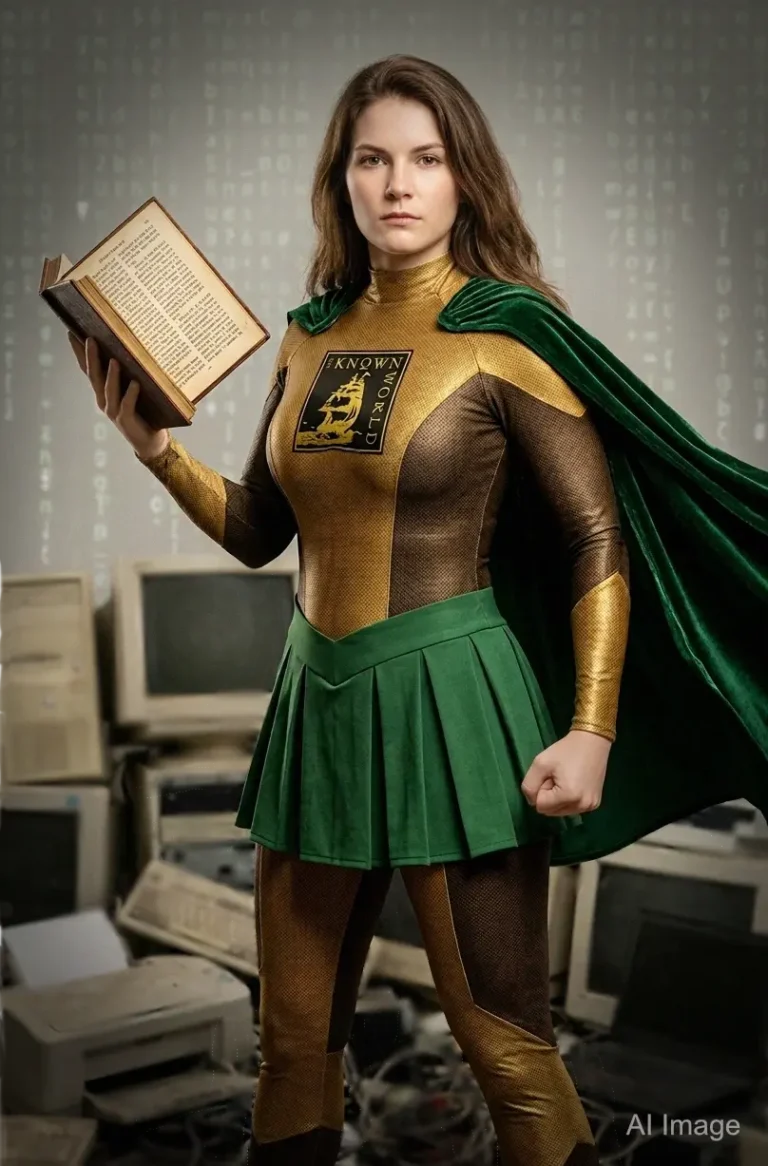
I have a superpower.
No, I can’t leap tall buildings in a single bound, or travel to the past, but I think my superpower is no less impressive.
But it is a superpower of omission. I am virtually technologically illiterate.
That’s it. That’s my superpower.
What it means is that I struggle with just about every technological advance that has ever been created.
Ok, I’m tapping away here on my computer, but don’t ask me to format the page or put a border around it. I simply can’t do it.
If the printer starts spitting out more pages than I wanted, I can’t stop it. Very soon I will be wading through a sea of wasted A4 paper, frantically punching every button on the printer and pleading with the printer gods to stop the tsunami.
If I create a document and save it, I’ll never be able to find it again, no matter how hard I try.
My car is over 20 years old, but I simply can’t navigate the audio system. I’m too scared to play a CD in case I can’t work out how to get back to my favourite radio station (Classic FM, if you must know. And yes, I still listen to CDs. What the hell is a Bluetooth?).
And the final imposition? Optus recently took upon itself to “screen” my calls on my behalf, meaning that every person who tried to call my bookshop whose number my phone didn’t recognise (i.e., all of them), was blocked.
As for Facebook, I’m completely hopeless. I don’t know how it works.
I see Facebook notifications turn up on my email feed (yes, I can use email, even though it’s started sorting my emails into “Focused” and “Other”. Why the hell does it presume to know what I think is important or not?), but, if I click on them, I can’t seem to access the content that has aroused my curiosity.
I’m taken somewhere completely different – usually an advertisement for some product I don’t want.
I can upload photographs onto Instagram, but then, when I try to review them, I can’t find them.
I’ve never “tweeted” and I’m still not exactly sure what TikTok is.
But my point is, in a world where electronic profiles are made of us according to our uses of social media resulting in algorithms that predict what we want to buy – or, more insidiously, what to think – I believe that I have left a very faint footprint. And that suits me.
I don’t want to become a commodity that only has utility in the 21st century as an object to whom stuff can be sold.
Reading is an extremely private act – especially reading from an actual book with actual pages. I can be sitting in a public space, my nose buried in a work of fiction, and no one knows what is happening inside my brain, or where my imagination is being transported.
Google Earth may know where my body is, but it can’t look into my mind. I can be sitting under a blazing Australian summer sun, whilst my imagination is roaming across the frozen tundra in Russia, or navigating the slums in 19h century London on a freezing, dank winter’s day.
I have a theory that, as Artificial Intelligence becomes an increasingly more pervasive feature in our lives, and we can no longer distinguish what has been generated by AI, and what has been created by a living, breathing, human being, more people are going to turn to actual paperback and casebound books, intuitively recognising that they contain authentic human thoughts and stories, that they are the authentic embodiments of the human imagination.
I just had a discussion with a customer about a book by Angus Fletcher called Primal Intelligence. I haven’t read this book yet, but Rod tells me that it considers the singular importance of storytelling as a feature of human cognition – and I would also add, nutrition.
We are nourished by storytelling. It fuels our brains, helps us make sense of the world around us, allows us to navigate in safety untravelled frontiers, to explore the unknown without risk, and to understand and apprehend the world that precedes us, that we now live in, or to speculate about the far distant future.
I may never travel to Russia, but I have read Tolstoy and Dostoyevsky, and can see the onion-shaped domes of St Petersburg in my mind. I can’t travel back in time to 19th century London, or witness the hardships endured there by the beggars and chimney sweeps, but Dickens has reached out to me across the centuries and led my mind through its dark cobblestoned lanes.
In a world where everything is bared and shared, reading is a private, but revolutionary, even subversive, act.
Real books, by real human beings, distract us from our own frail selves and the complexity and busy-ness of our 21st century lives. They lead us beyond the mundane and enable our imaginations to soar.
Books enrich us.
And when we’re reading, no one knows what is going on in our brains.
Which suits me just fine.
I confess that, over recent years, I have largely read “books” I’m not sure I can legitimately even refer to them as such) in the kindling format. Our Amazonian e-overlords have greedily taken my e-money from my e-bank to e-generously grant me little more than e-access to e-books, all wrapped in pixels, available to e-consume instantly. Then, to abandon and leave as a sad spectre soaking up e-storage on some ethereal cloud of zeroes and ones floating e-somewhere.
Pixels on an e-page that had, over time, inured my senses to the true nature of what it was to hold an old book, feel its weight, turn its dog-eared pages. and smell its evocative essence of time and memory.
Since I’ve known this little treasure house of history, The Known World Bookshop, memories once thought banished are re-emerging. Every book I hold now makes them stronger. They reveal slowly their true essence, the deep connection to all whose hands, eyes, emotions and imaginations have graced their pages.
I once again read books, real books.